Description: Judges Chapter 15 is a back and forth battle between Samson and the Philistines. Ultimately it ends showing us an imperfect judge who cannot completely deliver his people because he needs rescue himself.
Description: Samson travels to Timnah and along the way is attacked by a lion that he kills with his bare hands, mightily empowered by God. On a later journey, this time to marry his chosen Philistine girl, Samson finds the lion carcass housing a swarm of bees and full of honey. He later uses this encounter as the basis of a riddle to the 30 Philistine men at his wedding party. No one could ever solve Samson’s riddle…that is unless they cheat!
Description: God sends the three judges Ibzan, Elon, and Abdon to judge Israel for 25 years and Israel doesn’t have any recorded battles or oppression (time of peace). Then God raises up the Philistines against them and they oppress the Israelites for 40 years. God then promises to deliver these unfaithful people and announces the coming baby who will save them.
Description: After Jephthah’s defeat of the Ammonites and the wicked sacrifice of his own daughter, his troubles are not over. He is rebuked by the Ephraimites and ends up fighting against them and over 40,000 Ephraimites die. Israelite killing Israelite.
With all of the sinfulness and tragedy in the life of Jephthah, the book of Judges is not the only place we see mention of his name. Jephthah surprisingly is listed in the “Hall of Faith” in Hebrews 11. We explore how Jephthah might have “made the cut”.
Description: The Judge Jephthah was a man who was despised and rejected by his brethren but who ended up saving them from the hand of the Ammonites. Yet even as God used him, he did an unthinkable act and sacrificed his daughter to God…a sacrifice that God didn’t want and certainly didn’t approve of.
Description: Judges 10 begins with the accounts of two minor judges, Tola and Jair who bring about over 40 years of peace. But the author of Judges tells us that this time of peace resulted in an incredible period of apostasy and idolatry.
Description: Gideon’s legacy is a sad one. It involves idolatry, civil unrest, fratricide, deceit, retribution, and a large mill stone. God will not allow evil to go unpunished and Gideon’s son Abimelech meets his demise ultimately from the hand of God who punishes him for the wrong he has done to the house of his father.
Description: Gideon goes from doing things in the Lord’s strength to doing things in his own strength and in that decline we see the rise of sinful leadership and wicked idolatry. It’s a journey from godly legacy to idolatrous tyrant that leaves us checking our own hearts and thanking God for the final Judge sent for the deliverance of God’s people, the Lord Jesus Christ.
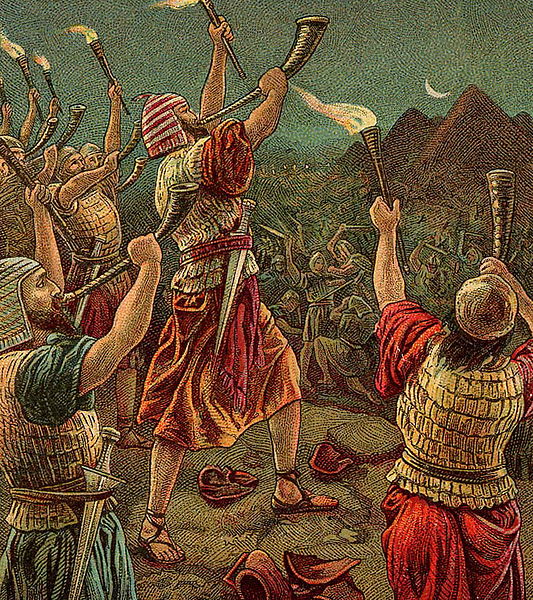
Description: Sometimes God sends a trial into our lives to loosen our grasp on something that we were holding on to tighter than Christ. In the case of the Israelites, they saw strength in their numbers as they prepared to battle the Midianites and Amalekites. In order to prevent them from glorifying themselves, God drastically shrinks their numbers until their victory is impossible and that’s exactly where God wants them.
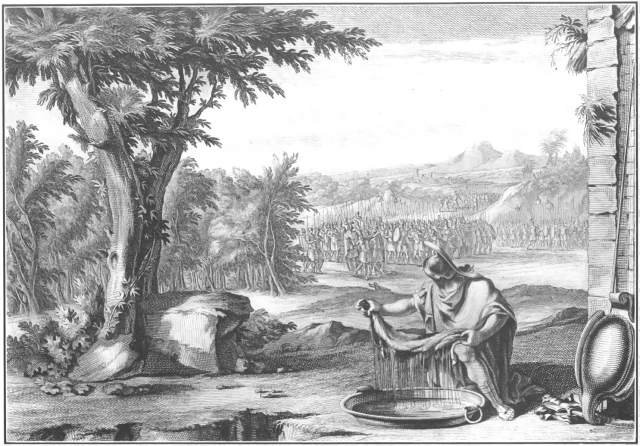
Description: Gideon doesn’t know if the Lord can be trusted so in an effort to test the Lord’s trustworthiness, Gideon tests the Lord twice by the use of a fleece that he lays out before the Lord.
Description: God raises up a reluctant Judge named Gideon who is hiding in a wine press. Gideon is not only fearful but His first task is to tear down the community alter to Baal that just happens to be in his own backyard.
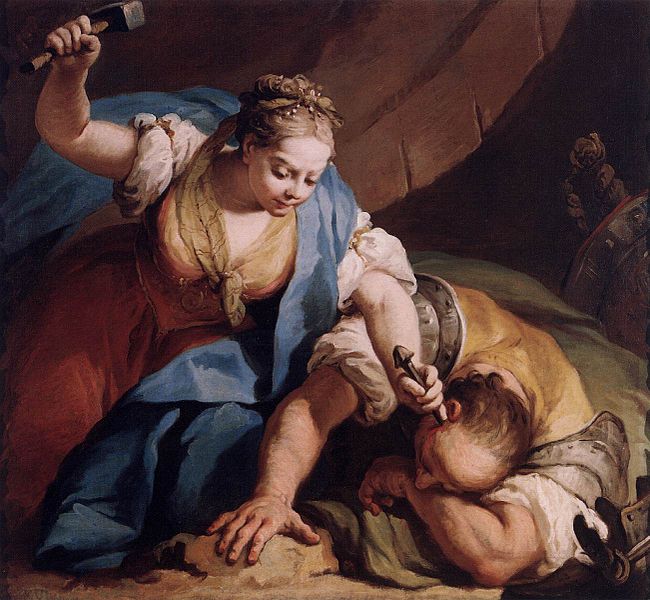
Description: The story of Deborah and Barak and God’s deliverance through the hand of the woman Jael may be one of the most disturbing accounts of treachery recorded in the Bible and yet God delivers His people through these shocking events. In this account God calls an unfaithful general, Sisera, through the prophetess, Deborah, who ruled the people. Because of his unfaithfulness, God delivers their enemy to the hands of a foreign (and pagan) woman named Jael who brutally murders the enemy general by smashing a tent spike through his head with a hammer. The Bible celebrates her deed.
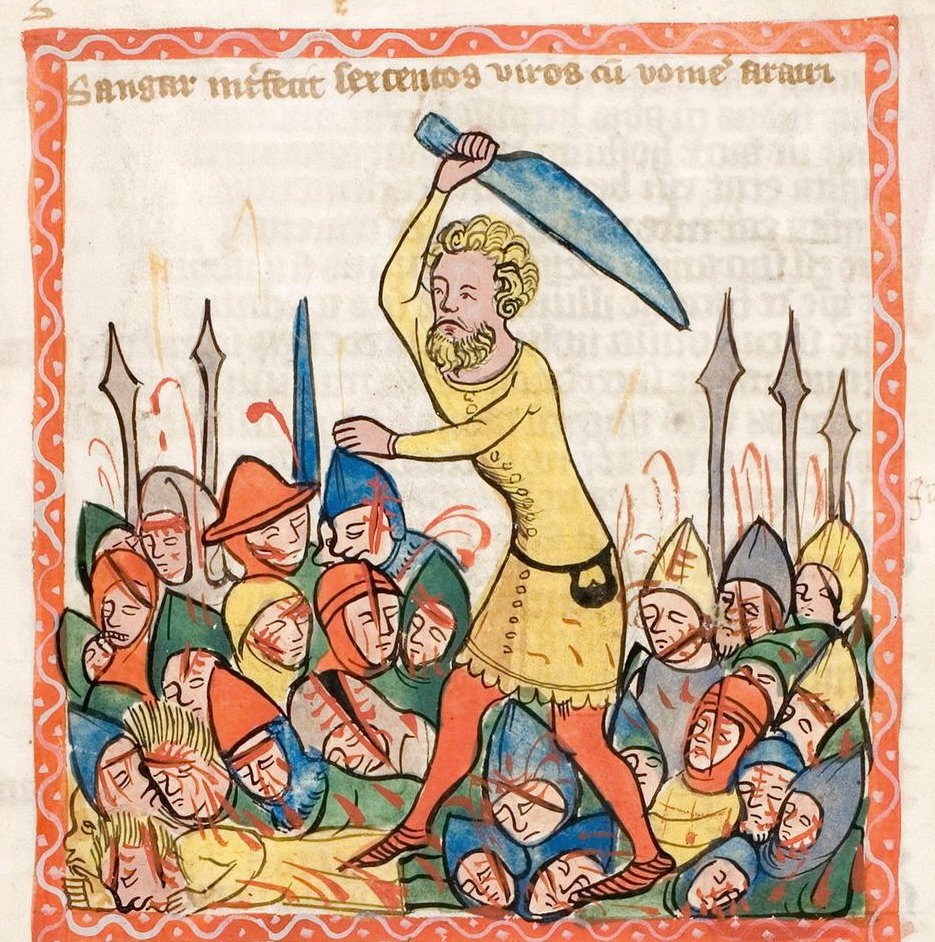
Description: Shamgar is the judge of obscurity. By all accounts he is an ordinary farmer whom God uses in an extraordinary way. No one celebrates the normal and the ordinary but the Bible is full of ordinary folks living an ordinary life. God calls us to serve in our normal callings and nowhere is this seen more clearly than in the callings of wife and mother.
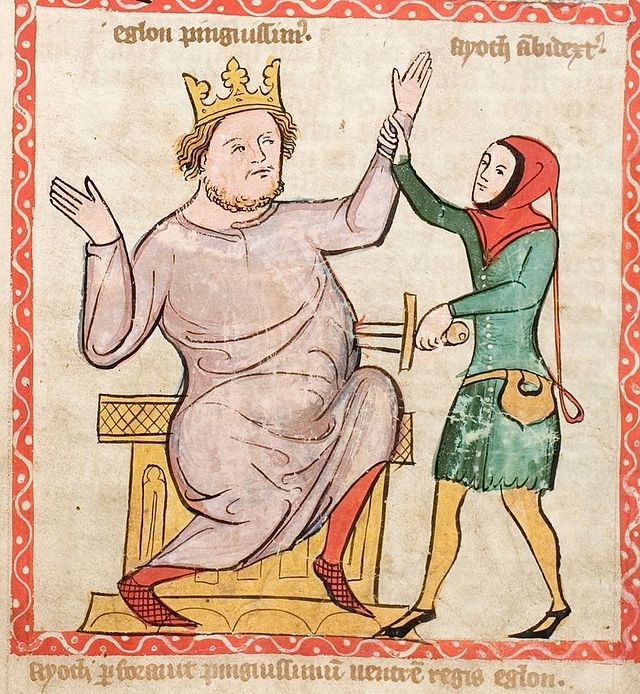
Description: Ehud, from the tribe of Benjamin, is the second Judge God raises up to deliver His people from the hand of Eglon, King of Moab. Ehud assassinates Eglon in His throne room by plunging a self-made sword into his abdomen and killing Eglon before making a great escape. He gathers the Israelites and leads them to a decisive victory by the strength of the Lord and the land is restored to peace, which lasts for two generations.
Description: Othniel is mentioned as the first Judge of Israel. His story is not spectacular, it’s simple, straight-forward… even boring. But Othniel is not the hero of the story. God is. God is always the rescuer of His people and receives all the glory.
Description: In this section of the book of Judges, the author introduces the cycles of unfaithfulness on the part of the people and the deliverance from the hand of God.
Description: Israel was given two battles: the first – a battle within the home for the hearts of the next generation; the second – a battle outside the home to possess the land. Failure in either would ultimately lead to failure in both. The book of Judges begins with generational unfaithfulness and leads to covenantal unfaithfulness.
Description: Israel fails to take the land and this sets off 350 years of rapid decline. It’s a downward spiral of depravity as things go from bad to worse. God hears the cries of His people and over and over He sends a judge to rescue them. But when the judge dies, the people fall back into idolatry and rebellion…and so the cycle continues.
The anticipation is for a judge that will rule righteously and not die. And whose righteous rule will bring a time of peace and the possession of the land. That anticipation has been met in Christ who is the only righteous king and who alone obeyed the covenant for the prospering of His people.
Description: Israel fails to take the land and this sets off 350 years of rapid decline. It’s a downward spiral of depravity as things go from bad to worse. God hears the cries of His people and over and over He sends a judge to rescue them, but when the judge dies, the people fall back into idolatry and rebellion…and so the cycle continues.
The anticipation is for a judge that will rule righteously and not die, and whose righteous rule will bring a time of peace and possession of the land. That anticipation has been met in Christ who is the only righteous King and who alone obeyed the covenant for the prospering of His people.
Sermon Archives
Given New Life
in SBC Classic Edition
We’re in the process of digging through the colossal SBC Sermon Archive Library to bring forth the rich and timeless Biblical Truths found within the hundreds and hundreds of sermon cassettes from yesteryear, in our Tape to Podcast Project.
Currently on the workbench:
The Jim Allen Gospel of John Study (1997-1998) is now complete and in our SBC Classic Edition collection!
Watch our Steeple Study grow! … Great for a listen-study through a book or series.
Our Find-A-Sermon resource page helps you find what you’re looking for.
With the increased release of sermons from our archives, SBC Classic Edition is now podcasting on its own dedicated feed, separate from our current Sunday sermons.
 Sermon Notes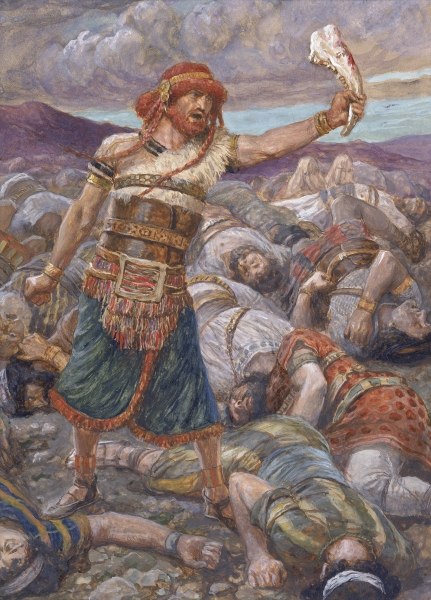


 Posted by drlamar










 Scandia Bible Church